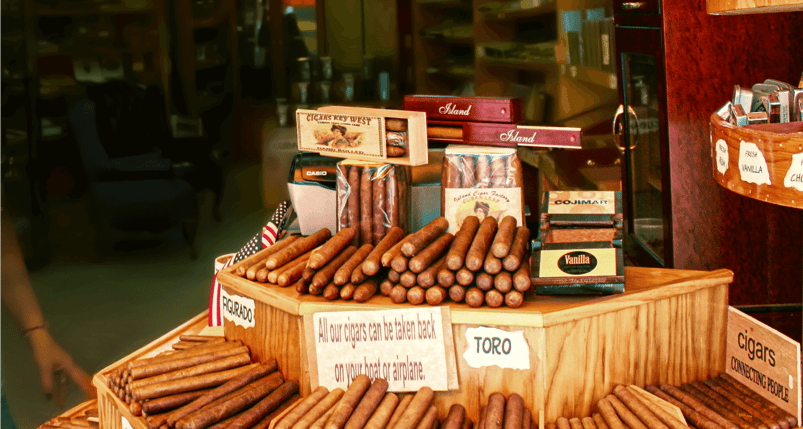



Tobacco store inventory is unforgiving in ways that generic retail isn't. A cigar stored at the wrong humidity loses its draw. Stock a brand out twice in one week, and regulars will find a shop that carries it.
The margin for error is thin, and the product mix is wide. Individual sticks, cartons, vape hardware, e-liquids, pipe tobacco, and accessories all have different shelf lives and reorder timelines. You're managing hundreds of SKUs, and most inventory problems come down to not having enough visibility.
This post breaks down the tools that give you that visibility. The habits that follow keep your inventory turning and your shelves stocked — and they keep your cash flow from getting tied up in the wrong products.
The Tools You Need First
Before any inventory strategy works, you need the right infrastructure. These three tools make everything else possible:
- A tobacco-specific point of sale (POS) system: A generic retail POS won't account for case breaking, carton-pack tracking, or tobacco-native reordering. Cigars POS handles all of it, including automatically ranking products from A to D and generating purchase orders automatically when stock drops below your set threshold.
- A barcode scanner and label printer: Scanners keep stock counts accurate at checkout in real time. A label printer solves the cigar-specific problem of unlabeled individual sticks, making every stick scannable, trackable, and easier for customers to browse on their own.
- Sales reports and analytics: Turnover reports, trend data, and margin breakdowns show you what's actually performing, not just what looks full on the shelf.
7 Tips for Keeping Tobacco Store Inventory Healthy
Tools handle the tracking. These habits keep your inventory turning and your margins protected.
1. Set Reorder Points Before You're Already Out
The most common inventory mistake is reacting too late. By the time a product hits zero, you've already lost sales. If a customer comes in twice to find their usual cigarette brand gone, they'll find a shop that has it. Retailers miss roughly 7.4% of potential sales from stockouts, and in a high-volume tobacco shop, that adds up fast.
Set reorder points that account for your lead time with each vendor. If a supplier takes four days to deliver and you sell through a product in three, your reorder trigger needs to fire well before you're scraping the bottom of the shelf. Cigars POS lets you set these thresholds by product and adjusts them against real sales velocity so you don’t have to guess.
Related Read: 7 Inventory Mistakes Tobacco Shops Make (and How To Avoid Them)
2. Use Product Rankings To Guide Buying Decisions
Your A-ranked products deserve priority shelf space, consistent stock, and tight reorder points. Your D-ranked products deserve scrutiny. When something consistently lands at the bottom of your rankings, it's either priced wrong, positioned poorly, or customers genuinely don't want it in your store.
A tobacco shop owner carrying three midrange cigar brands when only one moves reliably is tying up cash and shelf space on products that aren't earning either. Use your rankings to audit buying decisions quarterly and cut or reduce reorders on chronic underperformers.
3. Practice FIFO Rotation — Especially for Pipe Tobacco and E-Liquids
First in, first out (FIFO) means older stock sells before newer stock. New product goes to the back, older product comes to the front. Without that physical discipline built into your restocking routine, items drift to the back of the shelf and sit there longer than they should.
For pipe tobacco and e-liquids, this matters even more. Letting either sit past its ideal window creates product quality issues and losses that are entirely preventable. Train your staff to rotate automatically every time new stock comes in, not just when you think to remind them.

4. Move Slow Movers Before They Go Stale
Catching a slow mover early gives you options. Waiting too long leaves you with one: a markdown or write-off. When your reports flag something that's been sitting, try repositioning it before you touch the price.
Moving a slow product to a spot near the checkout or entrance, paired with a "Staff Pick" sign, can revive interest without cutting into margin. Bundling works, too. If a cigar brand isn't moving on its own, pairing it with a well-known cutter or a sampler at a slight discount gives customers a reason to try it. If neither works, use Cigars POS' built-in SMS tools to send a targeted promotion to loyalty members who are already in the habit of buying from you.
5. Use Your Floor Layout To Support Turnover
Where a product lives in your store affects how fast it sells. High-traffic zones near the entrance and checkout drive impulse purchases, which is exactly why accessories like lighters, cutters, and rolling papers belong there, not tucked in a corner. Eye-level placement consistently outperforms bottom-shelf placement, especially for higher-margin items you want customers to notice.
Grouping related products together also increases basket size naturally. A customer who comes in for cigars and sees a quality cutter displayed alongside them is more likely to grab both. Your layout should do some of the selling work for you.
Related Read: Maximize Your Layout: Smoke Shop Design Ideas To Try in 2026
6. Track Trends and Adjust Your Mix
Vape and alternative products have been growing their share of the market while traditional cigarette sales have declined. A customer who was a cigarette regular two or three years ago may be shopping your vape section almost exclusively now.
Your sales reports surface this shift over time. If one e-liquid brand has climbed in rank every month while a cigarette brand you've stocked for years keeps slipping, that's a signal worth acting on — more shelf space and tighter reordering for what's growing, less commitment to what's fading. Your buying decisions need to move with what customers are actually purchasing, not what they used to purchase.
7. Run Cycle Counts Instead of One Big Annual Audit
Waiting until year-end to reconcile your physical inventory with your POS records is a reliable way to find expensive surprises. Cycle counts — where you count a rotating section of inventory on a regular schedule — catch discrepancies early and spread the workload so it never becomes overwhelming.
Fixing inventory inaccuracies can boost sales by 4% to 8%, because accurate records mean reordering the right things at the right time rather than discovering gaps after a customer has already walked out. For a shop doing $15,000 a month in revenue, that range represents a real recovery worth building the habit for.
How Cigars POS Ties It All Together
Most tobacco shop owners know what good inventory management looks like in theory — the hard part is execution. Keeping up with reorder points, catching slow movers early, and rotating stock before it degrades takes a system built for this industry.
Cigars POS tracks inventory at the individual stick level through case breaking. Auto ranking grades every product from A to D, so you know what's earning its shelf space. Automated purchase orders fire when stock hits your threshold. Custom label printing makes every unlabeled stick scannable. Detailed sales reporting gives you the trend data to buy smarter every time.
Generic retail software wasn't built with any of this in mind. Schedule a demo and put these inventory strategies into action.